
𝐷𝑖𝑠𝑐𝑙𝑎𝑖𝑚𝑒𝑟: 𝑇ℎ𝑒 ℎ𝑖𝑠𝑡𝑜𝑟𝑖𝑐𝑎𝑙 𝑖𝑛𝑓𝑜𝑟𝑚𝑎𝑡𝑖𝑜𝑛 𝑝𝑟𝑒𝑠𝑒𝑛𝑡𝑒𝑑 𝑖𝑛 𝑡ℎ𝑖𝑠 𝑎𝑟𝑡𝑖𝑐𝑙𝑒 𝑖𝑠 𝑏𝑎𝑠𝑒𝑑 𝑜𝑛 𝑎 𝑠𝑦𝑛𝑡ℎ𝑒𝑠𝑖𝑠 𝑜𝑓 𝑎𝑟𝑐ℎ𝑖𝑡𝑒𝑐𝑡𝑢𝑟𝑎𝑙 𝑑𝑎𝑡𝑎𝑏𝑎𝑠𝑒𝑠, 𝑎𝑐𝑎𝑑𝑒𝑚𝑖𝑐 𝑟𝑒𝑠𝑒𝑎𝑟𝑐ℎ, 𝑎𝑛𝑑 𝑙𝑜𝑐𝑎𝑙 ℎ𝑖𝑠𝑡𝑜𝑟𝑖𝑐𝑎𝑙 𝑎𝑐𝑐𝑜𝑢𝑛𝑡𝑠. 𝑊ℎ𝑖𝑙𝑒 𝑒𝑣𝑒𝑟𝑦 𝑒𝑓𝑓𝑜𝑟𝑡 ℎ𝑎𝑠 𝑏𝑒𝑒𝑛 𝑚𝑎𝑑𝑒 𝑡𝑜 𝑐𝑟𝑜𝑠𝑠-𝑟𝑒𝑓𝑒𝑟𝑒𝑛𝑐𝑒 𝑓𝑎𝑐𝑡𝑠, ℎ𝑖𝑠𝑡𝑜𝑟𝑖𝑐𝑎𝑙 𝑟𝑒𝑐𝑜𝑟𝑑𝑠 𝑓𝑟𝑜𝑚 19𝑡ℎ-𝑐𝑒𝑛𝑡𝑢𝑟𝑦 𝑇𝑏𝑖𝑙𝑖𝑠𝑖 𝑜𝑐𝑐𝑎𝑠𝑖𝑜𝑛𝑎𝑙𝑙𝑦 𝑐𝑜𝑛𝑡𝑎𝑖𝑛 𝑐𝑜𝑛𝑓𝑙𝑖𝑐𝑡𝑖𝑛𝑔 𝑑𝑎𝑡𝑒𝑠 𝑎𝑛𝑑 𝑎𝑡𝑡𝑟𝑖𝑏𝑢𝑡𝑖𝑜𝑛𝑠. 𝑇ℎ𝑖𝑠 𝑝𝑜𝑠𝑡 𝑎𝑖𝑚𝑠 𝑡𝑜 𝑝𝑟𝑜𝑣𝑖𝑑𝑒 𝑡ℎ𝑒 𝑚𝑜𝑠𝑡 𝑎𝑐𝑐𝑢𝑟𝑎𝑡𝑒 𝑐𝑜𝑛𝑠𝑒𝑛𝑠𝑢𝑠 𝑎𝑣𝑎𝑖𝑙𝑎𝑏𝑙𝑒 𝑎𝑡 𝑡ℎ𝑒 𝑡𝑖𝑚𝑒 𝑜𝑓 𝑤𝑟𝑖𝑡𝑖𝑛𝑔.
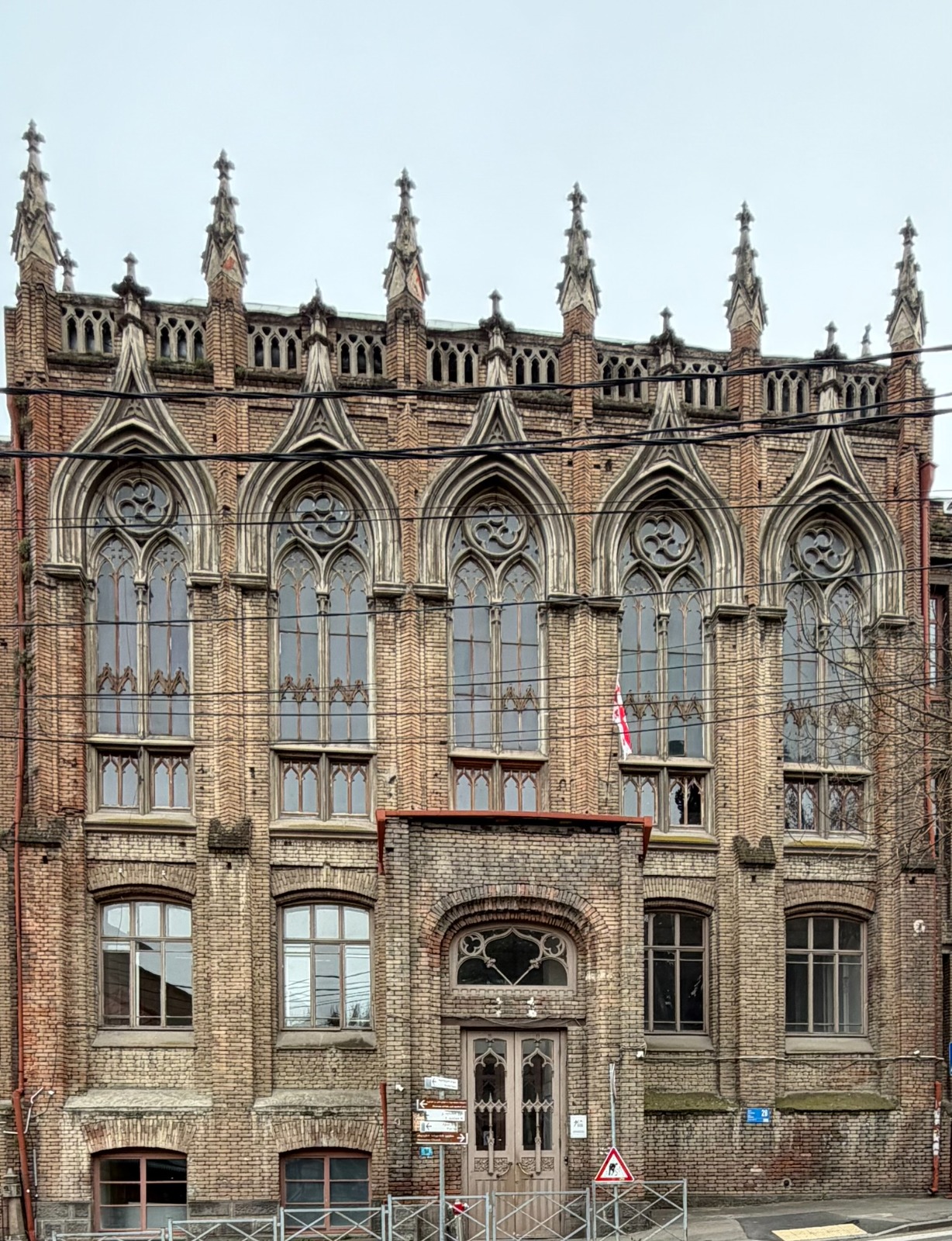
Tbilisi is a city of architectural contrasts, where ancient fortresses look down upon traditional wooden balconies, Art Nouveau mansions, and Soviet-era monuments. Yet, even among this eclectic mix, one building on Lado Asatiani Street stands out as a striking anomaly. With its pointed arches, intricate brickwork, and soaring spires, the building at 28 Lado Asatiani Street looks as though it was plucked straight from a European fairy tale. Locals affectionately call it the "Georgian Hogwarts," but the true history of this Neo-Gothic jewel is rooted in the fascinating legacy of Tbilisi's German community.
𝐀 𝐆𝐥𝐢𝐦𝐩𝐬𝐞 𝐢𝐧𝐭𝐨 𝐍𝐞𝐮-𝐓𝐢𝐟𝐥𝐢𝐬
To understand the origins of this remarkable structure, we must look back to the early 19th century. Historical records indicate that in 1817, Swabian Germans from Württemberg began settling in Georgia, establishing agricultural colonies and bringing with them advanced farming techniques, winemaking expertise, and distinct architectural styles
. By 1818, a settlement of German craftsmen known as Neu-Tiflis (New Tbilisi) was founded on the left bank of the Mtkvari River
As the city expanded, the German influence became increasingly prominent in Tbilisi's urban fabric. German architects and engineers played a crucial role in shaping the city's appearance, introducing European architectural movements such as Classicism, Renaissance Revival, and Neo-Gothic styles to the Georgian capital
𝐓𝐡𝐞 𝐍𝐨𝐛𝐥𝐞 𝐖𝐨𝐦𝐞𝐧'𝐬 𝐆𝐞𝐫𝐦𝐚𝐧 𝐒𝐜𝐡𝐨𝐨𝐥
The building at 28 Lado Asatiani Street, located in the historic Sololaki district, was born out of this cultural intersection. While many online sources and local legends mistakenly attribute the building to the German architect Paul Stern, authoritative architectural databases reveal a different story. The structure was designed by Alexander Ozerov (1849–1922), a prominent Russian architect who was highly active in Tbilisi
. Ozerov was well-integrated into the city's architectural circles and had previously collaborated with Paul Stern to design the magnificent Tbilisi City Hall in the 1880s
According to the Tbilisi Architecture Network and local heritage registries, the foundation for the building was laid on April 23, 1903, and it was consecrated on January 9, 1905
It was constructed to house the Noble Women's German School, a prestigious boarding school for girls that had evolved from Madame Serpine's private educational institution founded in 1888
The project was commissioned by the German community, and the boarding house was reportedly owned by M. Ananov, a well-known winemaker and merchant
𝐀𝐫𝐜𝐡𝐢𝐭𝐞𝐜𝐭𝐮𝐫𝐚𝐥 𝐁𝐫𝐢𝐥𝐥𝐢𝐚𝐧𝐜𝐞 𝐚𝐧𝐝 𝐌𝐲𝐬𝐭𝐢𝐜𝐚𝐥 𝐂𝐡𝐚𝐫𝐦
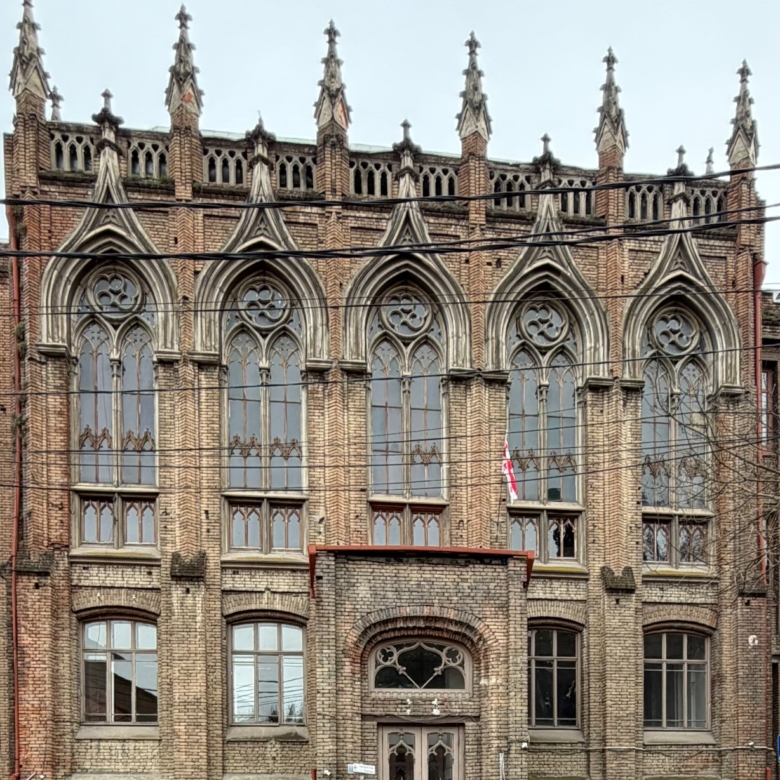
Ozerov's design for the school is a masterful execution of the Neo-Gothic (or Gothic Revival) style. The facade is defined by its dramatic pointed arches, intricate brick detailing, and elegant spires that reach toward the sky. The use of exposed brick rather than stone gives the building a warm, textured appearance that contrasts beautifully with the surrounding architecture.
Inside, the building was just as impressive. Historical accounts suggest the gymnasium originally included a Lutheran church complete with a pipe organ, serving the spiritual needs of the German students and staff
Even today, visitors can find remnants of this religious past, including old church doors adorned with colorful stained glass windows and crosses
The interior also features a grand marble staircase with ornate railings, beautifully crafted wooden doors, and a large event hall where celebrations were once held
𝐀 𝐂𝐞𝐧𝐭𝐮𝐫𝐲 𝐨𝐟 𝐓𝐫𝐚𝐧𝐬𝐟𝐨𝐫𝐦𝐚𝐭𝐢𝐨𝐧
Over the past century, the "Georgian Hogwarts" has witnessed the tumultuous history of Tbilisi unfold. Local historians note that during both the First and Second World Wars, the building's spacious halls were repurposed as an infirmary to treat wounded soldiers
In the Soviet era, the institution's German identity was erased, and it was transformed into Russian School No. 66
It later served as a law school before becoming Georgian School No. 58 in 2007
Today, the building continues its educational legacy as Authorized School No. 6
Despite these changes in function and administration, the building has remarkably retained its original architectural integrity. Recent restoration efforts have helped preserve its unique features, ensuring that Ozerov's masterpiece remains a vital part of Tbilisi's cultural heritage
𝐓𝐡𝐞 𝐋𝐞𝐠𝐚𝐜𝐲 𝐨𝐟 𝐏𝐚𝐮𝐥 𝐒𝐭𝐞𝐫𝐧
While Alexander Ozerov designed the school on Lado Asatiani Street, the frequent misattribution to Paul Stern highlights the profound impact German architects had on Tbilisi. Stern, who arrived in the city in the 1870s, was responsible for several of Tbilisi's most iconic buildings
His most famous work is the breathtaking Art Palace (formerly the Graf Oldenburg Palace) on Kargareteli Street, built in 1895
Like the school in Sololaki, the Art Palace features stunning Neo-Gothic elements, though Stern masterfully blended them with Islamic architectural motifs to create a truly unique structure
The fact that locals often confuse the works of Ozerov and Stern is a testament to the cohesive and enduring European architectural legacy they collectively left on the city.
𝐂𝐨𝐧𝐜𝐥𝐮𝐬𝐢𝐨𝐧
The Neo-Gothic building at 28 Lado Asatiani Street is much more than just a picturesque backdrop for photographs or a reminder of a famous fictional wizarding school. It is a tangible link to Tbilisi's cosmopolitan past, a monument to the city's historic German community, and a showcase of Alexander Ozerov's architectural brilliance. As it continues to function as a place of learning, the "Georgian Hogwarts" stands as a proud guardian of history in the heart of Old Tbilisi.
References
[1] Georgia Today. "From German Innovations to Georgian Traditions: A Dive into Cultural Intersection." August 8, 2024.
[2] Georgia Travel. "Agmashenebeli Avenue in Tbilisi (Neu-Tiflis)."
[3] Georgian Journal. "Georgian Hogwarts – 19th century Women’s Gymnasium in Tbilisi." March 3, 2016.
[4] Tbilisi Architecture Network. "Authorized School No.6." April 28, 2013.
[5] FaRiG. "Nineteenth-Century Architecture of Tbilisi as a Reflection of Cultural and Social History of the City" by Nino Chanishvili.
[6] ScanTbilisi. "Lado Asatiani Street N28."
[7] Georgian Journal. "Georgian Hogwarts – 19th century Women’s Gymnasium in Tbilisi." March 3, 2016.
[8] Spotted by Locals. "Hogwarts in Tbilisi - Harry Potter school."
[9] Irina Kurtishvili. "Paul(a) Stern – Unknown Archive."
[10] Wikipedia. "Art Palace of Georgia - Museum of Cultural History."








Join The Discussion